Energy Revolution System Bonuses: Four Titles Listed by the Seller
Four bonus titles, shown as titles only, with a plain note on the fuel, fire and electrical hazards that come with each subject and the ground rules that apply to all of them.
- Written by
- HealthCure Guide Editorial Team
- Reviewed by
- HealthCure Guide Editorial Team
- Updated
- Reading time
- 6 min read
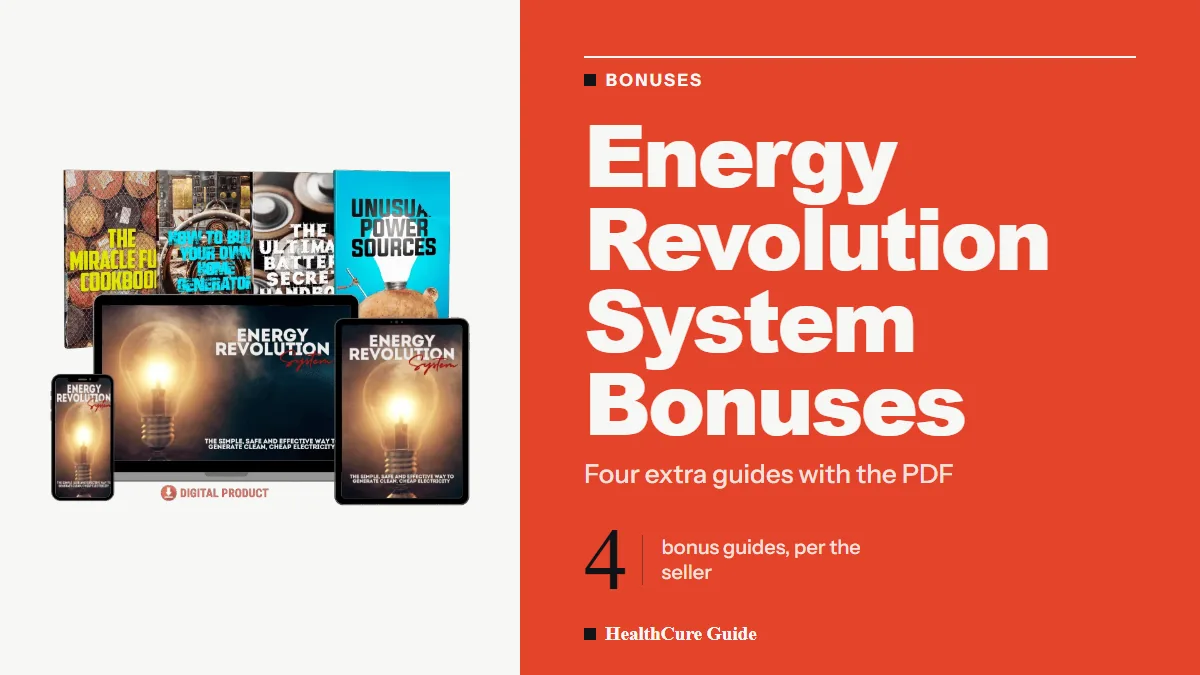
The Energy Revolution System bonuses are the part of the sales page that draws the most attention, and that is exactly why they need a calm reading. The seller lists four titles. This post gives each title on its own line, adds one neutral sentence about what the page shows, and then sets out the hazards that come with the subjects. We make no claims about what any bonus teaches, and we do not describe covers or contents, because the sales pages do not describe them.
Energy Revolution System bonuses, title by title
- The Miracle Fuel Cookbook. The seller lists this title among the four bonuses, and the page offers no description beyond the name.
- Build Your Own Alternator. The seller lists this title among the four bonuses, with no steps, parts or outcomes described on the page.
- Ultimate Battery Secrets. The seller lists this title among the four bonuses, and the page does not say what the handbook covers.
- Unusual Power Sources. The seller lists this title among the four bonuses, and the page gives no detail about the sources it covers.
Those are the full descriptions available on the sales page. The seller’s pages describe the bonuses in the language of its offer, and we have not repeated that language, because it makes claims that we cannot check.
Why we list titles only
A bonus title on a sales page is a promise in a small space. A reader can fill the gap with hopes about what it will do, and the seller’s wording tends to encourage that. We would rather leave the gap open. Nothing in this post suggests that any bonus produces power, replaces a qualified professional or makes a project simpler.
Reading a title well means asking what it does not say. A title with no outline, no parts list and no sample page tells you about the seller’s marketing, not about the work involved. If you want to know more, the only dependable source is the material itself, read after you have checked the local rules that apply to your home.
The seller’s own disclaimer, which calls the product an experiment that was not technically assessed, applies to the bonuses too.
Reading a bonus list well also means checking the order page rather than relying on a summary. Look for the bonus names on the checkout screen, confirm that the amount does not change when they appear, and note any line that describes them in terms you cannot verify. If something you expected is missing, the seller’s contact page is the right place to ask, with your order number ready.
A quick check of your own is useful here. For each title, ask what a reader would have to do first, what tools and parts that would require, and which local permit or professional would be involved. If you cannot answer those questions from the page, the title alone is not enough to plan anything, and the cautious move is to wait for more information before you spend time on the subject.
Hazards behind these subjects
Fuel is the first hazard. Making, storing or handling fuel at home brings fire risk and legal limits in many places. Fuel vapors can ignite from a spark, a hot surface or a static discharge, and containers need to stay away from heat and open flame. A title about fuel is a reason to read the local rules first, not a reason to start mixing anything.
Alternators and generators are the second. Work on them touches the electrical system, and a mistake can cause a shock, a short circuit or a fire. Connecting any such unit to house wiring is a job for a licensed electrician, and local codes may require an inspection before the system is used.
Batteries are the third. Large battery banks can store a great deal of energy, release it suddenly and produce heat. Burns, fire and electrical injury are all possible, so wiring, enclosures and the charging area all need careful planning and proper protection.
Unusual energy setups, the subject of the last title, add their own mix of risks, because they are often improvised. Improvised equipment rarely follows recognized standards, and it can fail in ways that a manual written for a specific product would avoid. Treat any such setup as a serious project with its own hazard review.
Working alone adds another layer of risk to all four subjects. Keep a charged phone within reach, tell someone where you are working and when you expect to finish, and never work on a live circuit, a fuel line or a battery bank in the dark or with tired hands. A slip that a second person would catch can turn into a serious injury when nobody is nearby.
Storage deserves its own thought. Fuel, batteries and chemicals belong in labeled containers, kept away from living spaces, heat sources and children. A cool, dry, ventilated area is a common recommendation, and your local fire authority can tell you which storage rules apply to your property before anything is brought into the house.
Safety rules that apply to every bonus
Every bonus carries the same ground rules as the main guide. Never run fuel-burning equipment indoors, because exhaust gases such as carbon monoxide can build up without warning. Keep a working smoke alarm and a carbon monoxide alarm in any space where you work or sleep, and keep a fire extinguisher rated for electrical fires within reach of the work area.
Local rules come first. The seller says some home alterations may be illegal where you live, so check with your local authority, your utility and your building department before you start. Let a qualified professional review any plan that touches power, fuel or water.
Home electrical and generator projects carry fire and shock risks, so a bonus title should be read as a reading list, not as a set of instructions for a live circuit. Reading about a subject is one thing, and wiring it into a home is a different job entirely. A sensible sequence runs from reading, to a written plan, to a permit check, to a professional review, and only then to any physical work. Skipping a step to move faster is the most common way a reasonable project turns into an expensive problem.
Smoke and carbon monoxide alarms are a modest, sensible precaution in any home where fuel is present, and they should be checked on a schedule you write down. Keep fire extinguishers in a place you can reach without walking through smoke, and check their gauges regularly. These are ordinary habits, and they matter most in the rooms where any project happens.
How the bonuses fit the offer
The bonuses sit alongside the main PDF in the seller’s offer, and the order page is where the bundle and any checkout add-ons appear. Read that page with the bonus titles in mind, so you can recognize each one when it appears on the screen and notice if anything extra is added without a clear label. The seller says any additional upgrades show up as separate transactions on the statement, so read each line before you confirm. Our price post walks through the single payment of $39 line by line.
If you want the guide’s own description first, the what is post covers the seller’s account of the PDF, and the full review explains who the offer may suit. Both pages keep the bonus titles in the same neutral tone used here.
For the layout of the download, read our what’s included page. It lays out the parts of the offer without claiming anything about what the bonuses achieve. The hub collects the price, guarantee and safety notes, and the bonus titles appear there only as titles.
If a bonus you expected does not show up with your download, do not assume it is tucked inside the main file. Contact the seller through its contact page, quote your order number and say which title is missing. Keep the reply, because it is the only record of what was promised at the time you bought.
A calm way to end the reading
Four titles, four neutral lines and a set of hazards that are real, each one worth reading about slowly and in order before any question of action comes up. If the subject of home power interests you, read the sales page, check the amount and read the main guide before you give the bonuses any weight. The bonuses are a part of the offer, not the reason to build anything, and the hub is the best place to start if you want the whole picture on one page.
Common questions
What are the Energy Revolution System bonuses?
The seller lists four titles: The Miracle Fuel Cookbook, Build Your Own Alternator, Ultimate Battery Secrets and Unusual Power Sources. The sales pages give little more than the titles.
Does the seller describe what the bonuses teach?
Not in any detail we could find. We therefore list the titles only and make no claims about their contents.
Are the bonuses part of the $39 order?
The seller presents them as part of the offer. Confirm on the order page what your checkout includes.
Do any of the bonuses involve fuel?
The first title concerns fuel, and the others touch alternators, batteries or unusual setups. Each subject carries its own hazards.
Should I start with the bonuses?
We would start with the main guide and its safety notes. The bonuses are a secondary part of the offer, and they follow the same ground rules.