How to Use The Brain Song: A Calm 12-Minute Daily Routine
One audio, twelve minutes, once a day. A practical set-up guide covering the time of day, headphones, volume, notes and the habits that keep a routine going.
- Written by
- HealthCure Guide Editorial Team
- Reviewed by
- HealthCure Guide Editorial Team
- Updated
- Reading time
- 7 min read
A new routine succeeds or fails on small details. When will you do it? Where? What will pull you away? Settle those questions before you start and the habit mostly looks after itself.
The audio asks very little of you. Twelve minutes, once a day. Everything below is about making those twelve minutes easy to protect.
How to use The Brain Song: the five-minute set-up
Before your first session, spend a few minutes on preparation.
- Gather your gear. A phone, tablet or laptop, and a pair of headphones you find comfortable.
- Find your access. Keep your order number where you can reach it.
- Pick a place. Somewhere quiet where you can sit without being interrupted.
- Choose a time. More on that next.
- Set a gentle volume. Start low and nudge it up.
That is all the equipment and planning the routine needs.
Choosing your slot
The seller names no ideal hour, so the right hour is simply whichever one you will stick with. A few popular choices follow.
| Slot | Why people like it |
|---|---|
| Right after waking | The day has not started pulling at you yet |
| Mid-morning break | A natural pause already exists |
| After work | A clean line between work and evening |
| Before an evening wind-down | Fits alongside other calm habits |
Pick one and stay with it for a while. Repeating the same slot matters more than which slot you choose, because a fixed time turns a decision into a reflex.
Headphones and volume
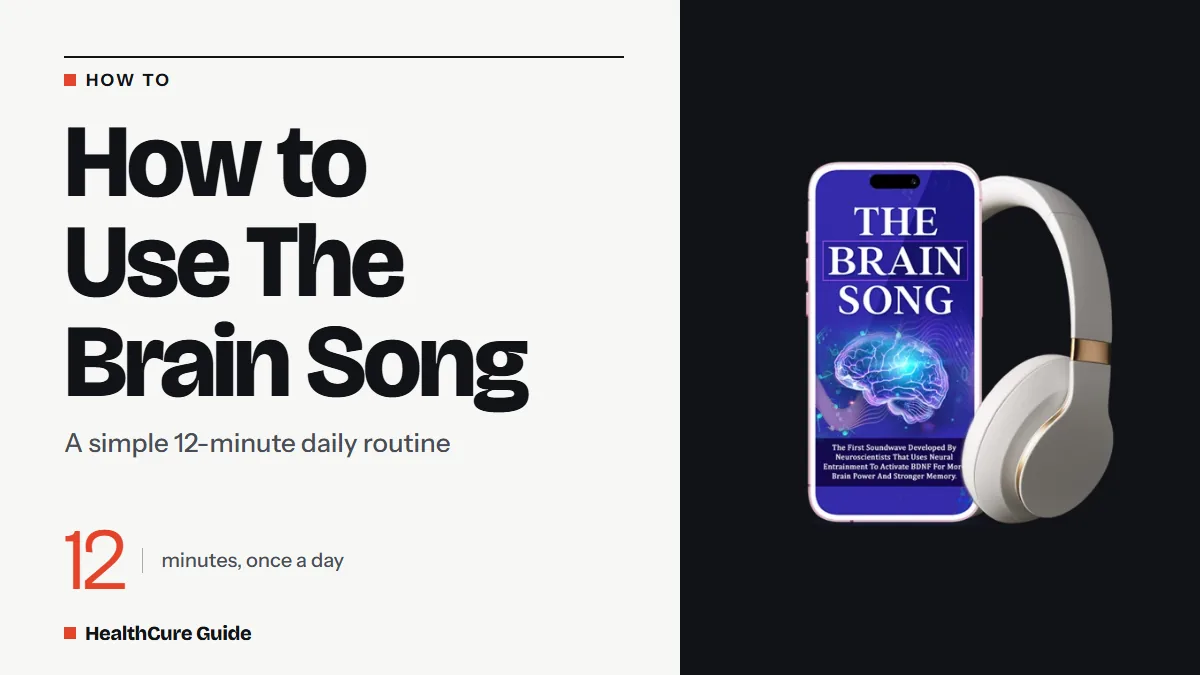
Headphones are the seller’s recommendation, and the product art shows a phone beside a pair. Put comfort first.
- Fit. Choose a pair you can wear for twelve minutes without noticing them.
- Volume. Begin low, then raise it only until the sound is clear. If you are straining or wincing, it is too loud.
- Quiet around you. A calm room lets you hear the whole track without cranking anything up.
Our guide to devices and listening tips goes into more detail on the gear side.
What to do during the twelve minutes
Very little, and that is the point.
Sit comfortably. A chair, a sofa corner or the edge of the bed all work.
Let the track run. There are no steps to follow and nothing to operate once it starts.
Keep your attention gentle. If your mind wanders, let it, and drift back to the sound. You are not being graded.
Stay put until it ends. Twelve minutes is short, and finishing the session each time builds the habit.
What not to do
Two rules keep the routine safe and enjoyable.
- Do not listen while driving or operating machinery. The seller’s track belongs to calm, seated moments.
- Do not push the volume. Comfortable is the target, and louder is never better.
A simple note card
Many people find that tiny notes make a routine more rewarding. You do not need a journal. A single card or phone note is enough.
- Before each session: one word for your mood.
- After each session: one word again, plus anything you noticed.
- At the end of each week: a quick look back through the words.
The notes give you something concrete to look at when you decide whether the audio earns a place in your day. They also keep you honest, because memory tends to smooth out the details.
A sample day, start to finish
Here is how one ordinary day might look, so you can picture the routine in real life.
You finish your morning coffee and carry your phone and headphones to a chair by the window. Notifications go on silent. You jot one word on a note card, press play and settle back. For twelve minutes you listen, and if your thoughts drift to the day ahead, you let them go and return to the sound. When the track ends, you take a breath, write a second word and carry on with your morning.
Nothing about it is dramatic, and that is intentional. The value of a routine like this lies in its steadiness, not in any one session.
If you are short on time
Some days are crowded. A few honest options keep the habit alive without cutting corners.
- Move the slot, not the length. If the usual time is impossible, listen later the same day instead of shortening the track.
- Use a different spot. A quiet corner at work or at home is fine, as long as you are seated and nothing needs your attention.
- Skip with a plan. If a day truly gets away from you, simply resume the next day.
Keeping the habit going
Good intentions fade without a little help. These small tricks make a daily listen stick.
- Attach it to something you already do. After brushing your teeth, after the school run, after closing your laptop.
- Keep the headphones visible. If they live in a drawer, they stay in the drawer.
- Make it easy to start. Keep the audio within a couple of taps on your device.
- Forgive a missed day. Pick it up the next day without drama.
- Protect the twelve minutes. Silence notifications and tell the household you will be back shortly.
What the seller says the audio is for
The seller presents The Brain Song as a short daily sound aimed at supporting focus, learning and mental wellness, with patterns it says lead the brain gently toward gamma frequencies. Think of it as a structured pause rather than a fix. If you want the background, our plain-words guide to BDNF and the seller’s idea explains the thinking.
The practical numbers
The price is $39, one time, with download or streaming access to the audio, and the hub keeps the full picture. Stretched across the refund period of ninety days, that works out near $0.43 daily. If the routine is not for you, email the seller’s support with the order number and a “Refund Request” subject line, or take it to ClickBank order support. See the price sub-page for the full figures.
Final thoughts
A routine built on twelve minutes is about as small as habits come. That is its strength. There is no equipment to buy beyond headphones you may already own, no schedule to juggle and no steep learning curve. If the seller’s idea appeals to you, the guarantee gives you a long window to see how the habit feels.
We rate the offer 9.0/10 for how easy it is to start and to stop.
Good to know:
- The audio is delivered online, so you can start as soon as you have checked out and have your download or stream access.
- The seller’s terms describe the track as entertainment, so your own experience may differ from anyone else’s.
- If you use a hearing device or have a history of seizures, speak to a doctor before you begin.
Common questions
How often should I listen?
The seller's suggestion is once a day, for the full twelve minutes.
What time of day is best?
The seller names none. Choose a slot you can protect, such as after waking or after work, and keep it the same.
Is a headset required?
The seller recommends headphones, and its art shows a phone beside a pair. Any set that feels comfortable is fine.
How loud should it be?
At a comfortable level. Start low and raise it only until the sound is clear.
Is it fine to listen behind the wheel?
No, and the same goes for using machinery. Save the track for quiet moments when nothing needs your full attention.
What if I skip a day?
Simply pick the routine up the next day. A habit is built from repeats, not from perfection.