Neuro Serge Ingredients: What the Six Named Plants Are There For
Curious what goes into the capsule? This guide meets each of the six plants the seller names, repeats what the seller says about it, and flags what the order page does not publish.
- Written by
- HealthCure Guide Editorial Team
- Reviewed by
- HealthCure Guide Editorial Team
- Updated
- Reading time
- 8 min read
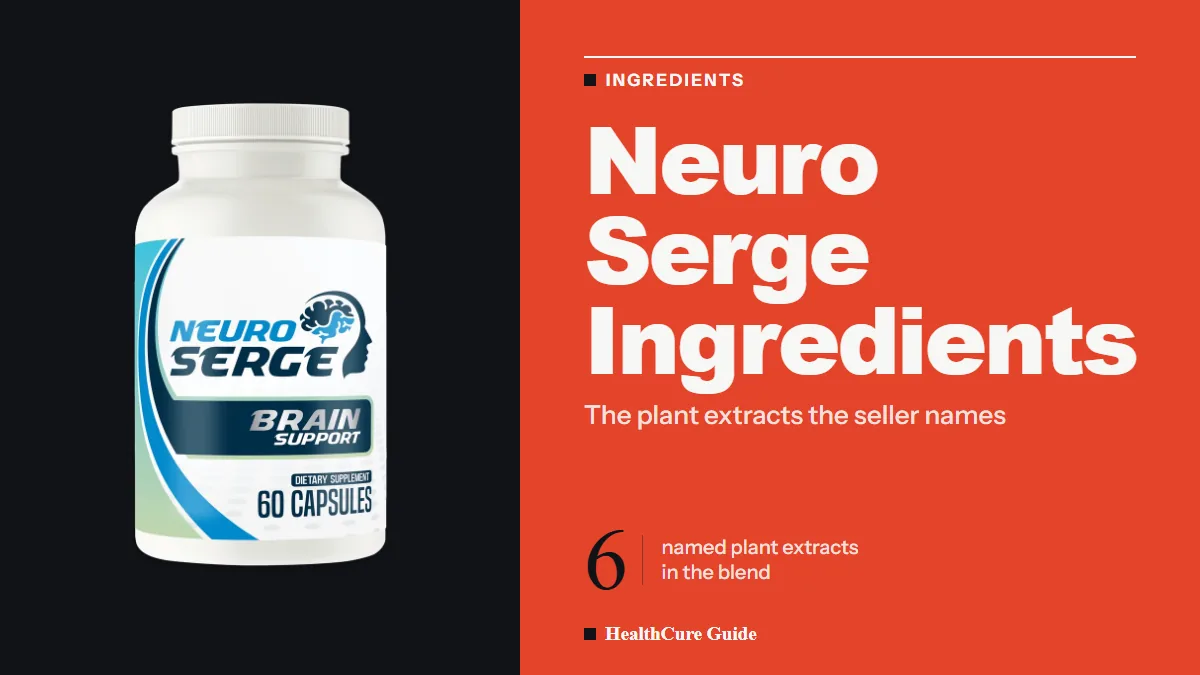
Most of us read a label before we put something in our body, and a capsule is no different. Anyone weighing up Neuro Serge ingredients wants the same thing: a clear list, a plain explanation and an honest note about what is missing. That is what you will find below, plant by plant.
The seller’s order page, viewed on 28 October 2026, is the only source for this guide. The statements about what each plant is for belong to the seller, and we say so each time. If you would like the overview first, the Neuro Serge hub covers the capsule in a few minutes.
The shape of the formula
The seller calls Neuro Serge a blend of plant extracts, and the bottle says Brain Support. Six botanicals are named. The pitch leans toward brain health, with focus and mental clarity as the stated aims, per the seller. It rests on the idea of several plants working together instead of one star ingredient.
That framing matters when you read the list. No plant is promised to fix anything, and none of the seller’s notes is medical. They are everyday phrases: a healthy inflammatory response, healthy blood flow, antioxidant support, helping manage stress. Our job is to pass them on faithfully and to keep a clear line between the seller’s words and our own.
Neuro Serge ingredients, one by one
Green tea extract
Green tea extract comes from tea leaves, the same plant behind the drink many people already enjoy. The seller says it is included for brain support. It also naturally contains caffeine, which is a good reason to handle it with a little care if you are sensitive. The order page does not say how much extract the capsule holds.
Grape seed extract
As the name suggests, this extract is made from grape seeds. The seller attaches two notes: it can support healthy blood flow, and it offers antioxidant support. Both are the seller’s phrasing, and neither comes with an amount.
Bilberry extract
Bilberry is a small dark berry in the same family as the blueberry. The seller connects it to a healthy inflammatory response and gives it no further description.
Cassia cinnamon
Cassia is a variety of cinnamon. The seller gives it the same single note as bilberry, a healthy inflammatory response. Two plants sharing a note is common in blends like this, since sellers group ingredients by theme.
DGL licorice
DGL is short for deglycyrrhizinated licorice. Two notes from the seller sit beside it, one about managing stress and one about a healthy inflammatory response, and both are worded with the cautious word may. Because licorice is a plant some people react to, it appears again in the doctor section below.
Olive leaf
Olive leaf extract comes from the leaves of the olive tree. The seller describes it as a traditional plant extract and says nothing more specific, so neither will we. A short, honest description beats a made-up role, so that is all we give.
How to read the seller’s soft notes
Phrases such as healthy inflammatory response or antioxidant support are common in the supplement world, and they are easy to over-read. A useful habit is to ask three questions of each one. Who said it? The seller did, so we attribute it. How firm is the wording? Words like may and can signal a hedge, not a promise. And what does it leave out? Almost always, the amount and the evidence.
That is not a criticism, simply a way of keeping your expectations steady. A seller’s note tells you why a plant is in the blend. It does not tell you what the blend will do for you, and the seller itself says results vary.
What the order page does not publish
Three details are missing. There is no amount for any of the six plants. There is no supplement-facts panel on the pages we read. And the capsule shell and any other ingredients are not listed. For that reason you will not find doses in our guides. The seller’s FAQ says to take the capsule with water, and the bottle carries the directions to follow.
None of this is unusual for blends sold online, and it is a fair reason to read the label when your bottle arrives. If you have an allergy or a strict diet, the support address, [email protected], is the place to ask before you order.
The quality statements the seller makes
Alongside the list, the seller shows badges: GMP certified, made in an FDA-registered facility, non-GMO, gluten free, and made in the USA. We pass these along as the seller’s own statements and have not independently verified them. The footer says the capsule is manufactured in the USA.
Taking the list to your doctor
Reading a list is one thing and knowing how it fits your health is another. Green tea and licorice deserve a mention if you react to caffeine or licorice. Grape seed, cinnamon and olive leaf are the sort of plants that people on a blood thinner, or on medicine for blood pressure or diabetes, tend to raise with a doctor or pharmacist. That is ordinary prudence and says nothing specific about this product.
The seller’s note extends the same request to pregnancy, nursing, prescriptions and medical conditions: speak to a physician first. Our safety page lists questions to bring along, and the guide to Neuro Serge side effects covers the same ground in a longer read.
What to look for when the bottle arrives
A printed label tells you more than any web page can. When your bottle turns up, spend a minute with it. Confirm the name and the Brain Support wording, and check that the pack holds 60 capsules. Read the directions printed on it and follow them as written, since the order page itself gives no serving. If the label lists other ingredients, such as the capsule material, you will see them there even though the order page does not name them.
Keep the box and the packing slip for a while. A returns note can call for the slip, and the box comes in handy if bottles ever need to go back. Nothing about that is a reason to worry. It is simply good housekeeping for any product that comes with a refund window.
Which plant to ask about first
If you are bringing the list to a professional, a short order of questions keeps the chat efficient.
- Green tea and licorice first. These two matter most for anyone who reacts to caffeine or licorice.
- Grape seed, cinnamon and olive leaf next. Ask whether any of them is a concern alongside the medicines you take.
- Bilberry last. It rarely needs more than a mention.
You can print the six names from our Neuro Serge page and hand them over, which saves a lot of explaining across a desk.
How the plants fit the seller’s plan
The seller says to give the capsule at least three to six months. That timescale fits a blend of gentle botanicals better than a quick fix, and it fits the way the packages are priced: each bottle is a month’s supply, so six bottles stretch across half a year at $49 apiece. If you would like to see the whole list again as a table, our ingredients list post sets it out.
Whether the blend suits you is a personal call. The 90-day refund window, which begins on your order date, is there so that call can be made with real use behind it.
Good to know:
- The notes on each plant are the seller’s, not ours.
- No amounts or supplement-facts panel are published.
- Ask your doctor first when medicine or a health condition is in the picture.
Common questions
What is in Neuro Serge?
The seller describes a blend of plant extracts and names six: bilberry, grape seed, green tea, DGL licorice, cassia cinnamon and olive leaf.
Does the order page say how much of each plant is in a capsule?
No. No amounts are published and there is no supplement-facts panel on the pages we read, so we quote none.
Which plant is included for brain support?
The seller says green tea extract is in the formula for brain support. Those are the seller's words, not our finding.
Does the capsule contain caffeine?
Green tea naturally contains caffeine, and the blend includes green tea extract. The amount is not published, so anyone sensitive should ask a professional first.
Is DGL the same as ordinary licorice?
DGL stands for deglycyrrhizinated licorice. It is licorice listed under that name, and anyone sensitive to licorice should still check with a doctor.
Where can I read the full list myself?
On the seller's order page, and in the table on our ingredients list post. The bottle you receive will carry its own label.