Arctic Blast Side Effects: Label Cautions and When to Ask a Doctor
A calm, practical guide to using a topical liquid well: what the label warns about, which situations call for a professional, and the simple habits that keep the first weeks uneventful.
- Written by
- HealthCure Guide Editorial Team
- Reviewed by
- HealthCure Guide Editorial Team
- Updated
- Reading time
- 7 min read
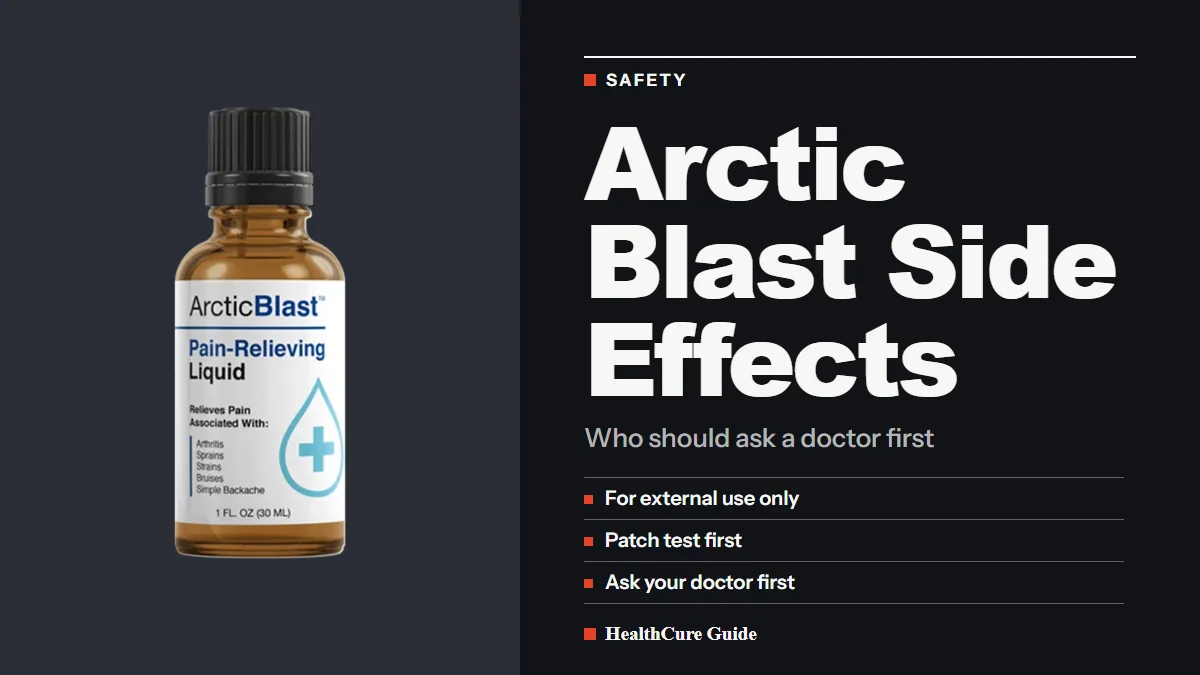
A topical liquid still deserves a careful start, even though it goes on the skin rather than into the body. Anyone looking up Arctic Blast side effects is usually asking two things: what could go wrong, and what to do about it. This guide answers both in practical terms, drawing on the label, the seller’s warnings and our own general advice, which we label wherever it appears. The Arctic Blast hub is there if you want the product facts alongside these notes.
Arctic Blast side effects: what the label warns about
The warnings are brief, and each one has a reason behind it:
- External use only. Apply the liquid to the skin, and keep it out of the eyes.
- No wounds or damaged skin. Do not apply it where the skin is broken, and do not bandage the area tightly.
- Flammable. The formula contains alcohols, so keep the bottle away from fire, flame and sparks, and tighten the cap after each use.
- Adults only. The directions are for adults 18 and over, applied to the affected area no more than three to four times a day.
- Pregnancy and breastfeeding. Contact a physician before use.
- Children. Keep the bottle out of reach.
Read those warnings once before the first use. They are short, and they cover the situations where a careful start matters most.
Why a patch test comes first
A patch test is a small, low-cost habit. Apply a little of the liquid to a limited area of clean skin, away from the eyes and any broken skin, and watch that area over the following day. If it burns, itches or turns red, wash the spot with water and speak to a pharmacist before going further. This is our general advice rather than the seller’s wording, and it suits any topical liquid you are trying for the first time.
Wintergreen, St. John’s wort and salicylates
The inactive list includes methyl salicylate (wintergreen) oil and St. John’s wort. People with an allergy to aspirin or to salicylates, people on blood thinners and anyone with sensitive skin should ask a doctor or pharmacist before the first application. This is the most important personal check on the list, and it takes only a few minutes with the label in hand. Bring the full ingredient list, not just the product name.
DMSO and other products on the same skin
The label lists DMSO among the inactive ingredients. In our general note, DMSO can carry other substances through the skin, so it is sensible to apply Arctic Blast to clean skin and to avoid layering it under other creams or lotions. If you already use another topical product on the same area, ask a pharmacist how the two should be used together. Keep the cap closed when the bottle is not in use, so the liquid stays where you put it.
Flammable, so keep it clear of heat
Alcohol content makes this a flammable product. Keep it well away from open flame, sparks and hot surfaces, including stoves, heaters and heated appliances. Tighten the cap firmly after every use, and store the bottle at ordinary room temperature. Careful storage also keeps the liquid consistent from the first drop to the last.
When to see a doctor instead of reaching for a bottle
Some symptoms belong with a clinician, not a topical liquid. Pain with swelling, redness, warmth, fever, numbness or weakness needs an examination. So does pain that follows an injury, and pain that wakes you at night. Arctic Blast does not replace that check. Keep your prescribed treatment and your regular appointments in place while you use any product, and let your doctor guide any change to your plan.
Questions to bring to your appointment
A short list makes a short visit. Consider asking:
- Do any of my current medicines interact with wintergreen or St. John’s wort?
- Given my skin history, is a topical liquid with menthol and camphor a reasonable choice for me?
- I am pregnant or breastfeeding. Is it still sensible to consider this product?
- Which of my prescriptions should I mention before the first application?
Write the answers down, and keep them with the bottle’s label and your order number.
What a reaction might look like and what to do
Most topical irritation shows up quickly, so the first hours after a test application matter most. Burning, itching, spreading redness or a rash in the area are signs to stop. Wash the spot with plain water, do not cover it, and avoid applying more. If the skin does not settle within a short time, or if the reaction spreads, see a doctor or pharmacist. These steps are our general advice, not a list of effects the seller has reported, and they apply to any topical product you start for the first time.
Who should be most careful
Some readers should go slower still. People who are pregnant or breastfeeding, anyone under 18, anyone with an allergy to aspirin or salicylates, anyone who takes blood thinners, and anyone with broken or very sensitive skin should talk with a clinician before applying the liquid at all. For these readers the label’s own instruction is the minimum, and a professional’s view is the sensible next step. This list is not meant to alarm anyone. It marks the groups where caution matters most. If you are unsure which group you belong to, the cautions in this guide are a reason to pause and ask, not a reason to give up the plan.
Eyes, children and broken skin
Keep the liquid out of the eyes. If it gets into them, rinse well with water and ask a doctor or pharmacist for advice. Do not apply it to wounds or broken skin, and do not bind the area afterwards. Store the bottle where children cannot reach it, and remember that the product is for adults aged 18 and over only. These points sound obvious, yet a busy routine is where they are most often overlooked.
Choosing a first day
A sensible first application is one made on a day when you are at home for a few hours, so you can notice how the area feels and act on any burning, itching or redness straight away. Pick a clean, dry patch of skin, apply a small amount and leave the bottle capped while you watch. Note the time and the area on a slip of paper beside the bottle. This is our own practical suggestion, and it costs nothing to follow.
Storage and daily handling
Keep the bottle upright, capped and at room temperature, away from direct sunlight and heat sources. Wipe the dropper tip after use so the cap seals cleanly. Store the bottle out of reach of children, and keep the label visible so you can check the warnings whenever you need them. A tidy routine is part of safe use, and it takes only a few seconds each day.
Our bottom line on safety
The warnings are short and clear, and the ingredients are printed in full. The main points are simple: follow the label, patch test first, respect the flammable warning and let a clinician weigh in if you have salicylate sensitivity, blood thinners, pregnancy or any condition that leaves you unsure. Our safety page gathers the same cautions in a shorter form, and the ingredients guide walks through the label entry by entry.
For a fuller picture before you decide, read the customer reviews guide and the money-back guarantee guide. Both point back to the same label and the same written terms.
Common questions
What does the Arctic Blast label warn about?
External use only, keep out of the eyes, not on wounds or damaged skin, do not bandage tightly, flammable, adults 18 and over, and contact a physician before use if pregnant or breastfeeding.
Can Arctic Blast be used with prescribed medicines?
Keep your prescribed medicines as they are, and ask a doctor or pharmacist before the first application if you use blood thinners or have any salicylate sensitivity.
What should I do if the liquid gets in my eyes?
Try to keep it out of the eyes in the first place. If it does get in, rinse well with water and ask a doctor or pharmacist for advice.
Should I patch test first?
Yes, as our general advice. Apply a small amount to clean skin away from the eyes and any broken skin, and watch the area over the next day.
Is Arctic Blast flammable?
The formula contains alcohols, so the label carries a flammable warning. Keep it away from fire, flame, sparks and heated surfaces, and close the cap firmly.
When should I see a doctor instead?
Pain with swelling, redness, warmth, fever, numbness or weakness, pain after an injury and pain that wakes you at night all call for an examination.