Tina Aldea Real or Fake? An Evidence Check of the Tina Aldea Soulmate Sketch
The question 'is Tina Aldea real or fake' hides three separate questions: is the service real, are the marketing claims real, and is the psychic part real. They have three different answers.
- Written by
- HealthCure Guide Editorial Team
- Reviewed by
- HealthCure Guide Editorial Team
- Updated
- Reading time
- 7 min read
This guide contains affiliate links. If you buy through them we earn a commission at no extra cost to you. It does not change the verdict. Disclosure.
“Tina Aldea real or fake” is one of the most searched questions about the Tina Aldea Soulmate Sketch, and it deserves a more careful answer than yes or no. The phrase bundles three different questions together. Is there a real service behind the page? Are the marketing claims real? And is the psychic part real? We took each one in turn, using only what the seller publishes and what can be checked.
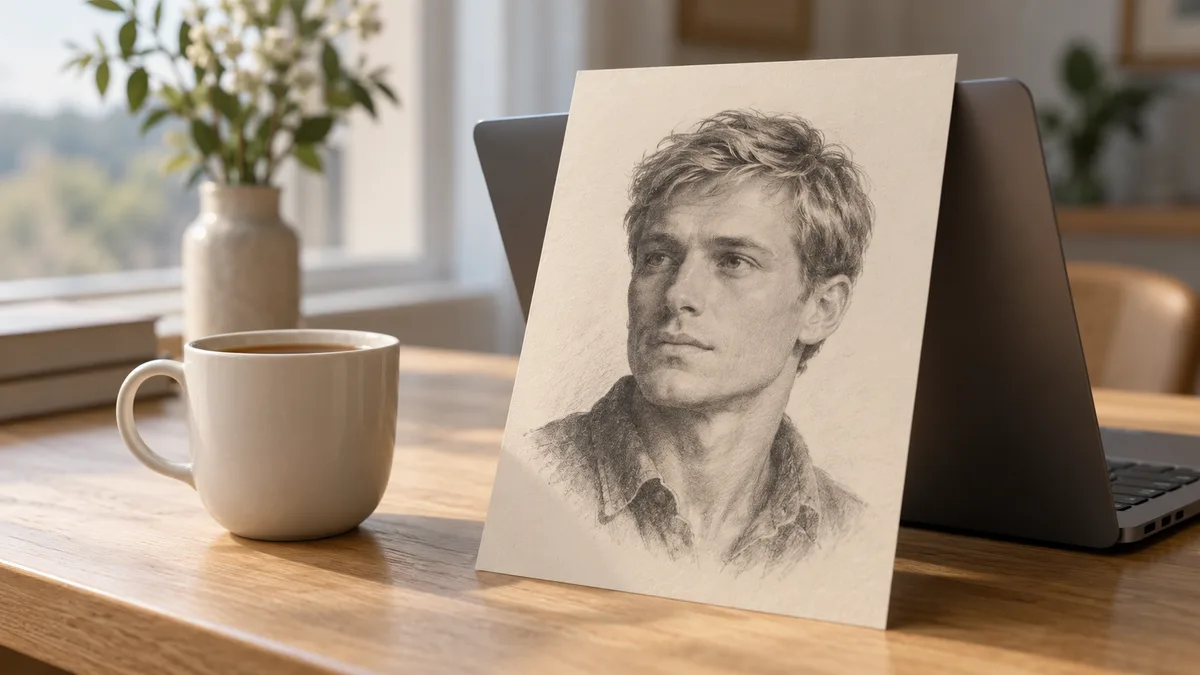
AI disclosure. According to the seller’s own disclaimer, the sketches are AI-generated images and the readings are AI-generated text, not drawings or writing produced by a psychic. The same disclaimer says any resemblance to a real person is purely coincidental, and that the service should not be the basis for relationship or life decisions.
For the safety of the purchase itself, including refunds and impersonator sites, see our Tina Aldea scam check.
Question 1: is the service real?
Yes. On the evidence available, there is a functioning paid service:
- The product is sold through ClickBank, an established marketplace for digital products, which processes payment and provides order support.
- Payment is by PayPal or major credit card.
- The seller describes email delivery of a sketch, reading and bonus guide usually within 24 to 48 hours, or about 6 hours with express.
- Support contacts are published: [email protected] for product questions and [email protected] for orders and revisions.
- A refund page exists and describes a ClickBank refund request route.
A fake service, in the sense of taking money and delivering nothing, would not usually operate through a mainstream retailer with published support and a refund process.
Question 2: are the marketing claims real?
Partly unverifiable. This is where the honest answer becomes more nuanced.
| Claim | Source | Can it be checked? |
|---|---|---|
| “43,284+ happy clients” | Seller’s page | No independent source |
| “4.9/5 based on 43,000+” | Seller’s page | No independent platform cited |
| Testimonials with photos | Seller’s page | Labelled not typical; photos may be stock |
| Normally $147, now $37 | Seller’s page | A reference price; the $37 offer is what is charged |
| 30-day money-back guarantee | Home page | Narrower on the refund page (see below) |
Two details stand out. First, the seller’s own disclaimer says testimonials are not typical and photos may be stock images. Second, the testimonial portraits on the home page load from a generic portrait service, which supports that reading. Neither proves the testimonials are invented, but neither lets you treat them as evidence.
Question 3: is the psychic part real?
No reliable evidence. There is no scientific evidence that anyone can see or draw a future partner by psychic means, and controlled tests of psychic claims have not shown results beyond chance. The seller does not ask you to believe otherwise in its terms: it states that sketches and readings are for entertainment purposes only, may not be unique, and carry no guarantee of outcome.
The “may not be unique” line deserves attention. It means you should not assume your portrait was created solely for you. That fits a product designed as personalised entertainment rather than as a one-of-a-kind prediction.
The refund headline vs the refund page
A useful test of any product’s claims is whether the headline matches the small print. Here it does not quite:
- Home page: “Risk-Free, 30 day money back guarantee.”
- Refund page: the guarantee applies if you do not receive your product; unhappy buyers are offered free revisions; completed sketches and readings are described as non-refundable. The page also explains how to request a refund through ClickBank order support.
That gap does not make the product fake. It does mean “risk-free” overstates how easy a refund is if you simply dislike the result.
Why “it came true” stories are not evidence
Testimonials for soulmate sketches often follow the same pattern: a buyer receives a drawing and later meets someone who resembles it. These stories feel persuasive, but they are weak evidence for several reasons:
- A plausible face resembles many people. A softly drawn portrait with common features will look like someone in most social circles.
- Selective sharing. People whose sketch “came true” are far more likely to share their story than people whose did not.
- Hindsight matching. Once we meet someone we like, we tend to notice similarities and overlook differences.
- Unverifiable sources. When testimonials are labelled not typical and their photos may be stock, their value as evidence drops further.
None of this means buyers who tell those stories are lying. It means the stories cannot tell you whether the sketch predicts anything.
What would make the claims more convincing
If the seller wanted to move the marketing from “unverifiable” towards “believable”, a few changes would help:
- Independent reviews on platforms the seller does not control, with both positive and negative experiences visible.
- Real customer photos shared with permission, instead of images that may be stock.
- Refund terms that match the headline, or a headline that matches the refund page.
- Putting the AI disclosure on the sales page. The disclaimer page already says sketches and readings are AI-generated; saying so where buyers decide would make the marketing match the terms.
Until then, the fair position is to treat the service as real, the claims as unverified, and the psychic element as entertainment.
How to check reviews you find elsewhere
If you look for Tina Aldea reviews outside the seller’s page, a few habits help separate useful accounts from marketing:
- Check for affiliate disclosure. Many review pages earn a commission, including ours. That does not make them wrong, but you should know.
- Look for specifics. Useful reviews mention how long delivery took, what the reading covered and whether a revision was requested.
- Look for downsides. A review with no criticism at all is almost always promotional.
- Be wary of “came true” headlines. For the reasons above, they say little about what you will receive.
- Check the date. Prices, delivery times and refund terms can change.
- Prefer platforms the seller does not control. Comments on the sales page are curated by definition.
How to decide, given the evidence
- Buy it if you want a fun, personalised keepsake at $37 and are comfortable that the claims around it are marketing.
- Skip it if unverifiable testimonials and narrow refund terms bother you, or if you were hoping for a genuine prediction.
- Think twice if you are in an emotionally vulnerable moment, when a reading can carry more weight than it should.
For a fuller picture of who it suits, see our Tina Aldea reviews.
Our verdict: Tina Aldea real or fake?
Tina Aldea is a real, functioning entertainment product: you pay through ClickBank and receive what is described. It is not “fake” in the sense of a non-existent service. Its marketing, however, leans on figures and testimonials that cannot be verified, its refund headline overstates the terms, and its psychic premise has no evidence behind it, which the seller’s own disclaimer acknowledges. Judge it as a $37 novelty, and the answer is clear enough.
This page is for information only and is not legal, financial or relationship advice.
Common questions
Is the Tina Aldea Soulmate Sketch hand-drawn or AI-generated?
AI-generated. The seller's disclaimer describes soulmate sketches as AI-generated artistic renderings created with artificial intelligence from the information you provide, and the accompanying descriptions as AI-generated creative spiritual writing. It adds that any resemblance to a real person is purely coincidental and that similar inputs may produce similar or identical outputs.
Is Tina Aldea real or fake?
The service is real: you pay $37 through ClickBank and receive a sketch, written reading and bonus guide by email. Several marketing claims cannot be verified, such as client counts and ratings, and the testimonials are labelled not typical with possible stock photos. Any psychic element has no reliable evidence behind it, which is why the seller calls it entertainment.
Are the Tina Aldea testimonials real?
We cannot verify them. The seller's own disclaimer says testimonials are not typical and photos may be stock images, and the testimonial portraits on the home page load from a generic portrait service. Treat them as marketing, not evidence.
Does Tina Aldea really have 43,000 clients?
That figure, and the 4.9 out of 5 rating, come from the seller's own page. There is no independent source to confirm them. They may or may not be accurate; buyers simply cannot check.
Is every Tina Aldea sketch unique?
The seller's disclaimer says sketches and readings may not be unique. That is a significant admission, and buyers should not assume their portrait was created only for them.
Is Tina Aldea legit to buy from?
As a transaction, yes: ClickBank is an established digital retailer, payment is by PayPal or card, and support contacts are published. Whether it is worth $37 depends on whether you want an entertainment product with limited refund terms.
What would make the claims more believable?
Independent reviews on platforms the seller does not control, real customer photos used with permission, and refund terms that match the home page headline. None of these are currently in place.