VisiFlora Side Effects: A Calm Safety Guide Before Your First Capsule
No alarm bells, just good habits. This guide covers what the label asks of you, which situations call for a doctor's view first and how to handle the first weeks sensibly.
- Written by
- HealthCure Guide Editorial Team
- Reviewed by
- HealthCure Guide Editorial Team
- Updated
- Reading time
- 8 min read
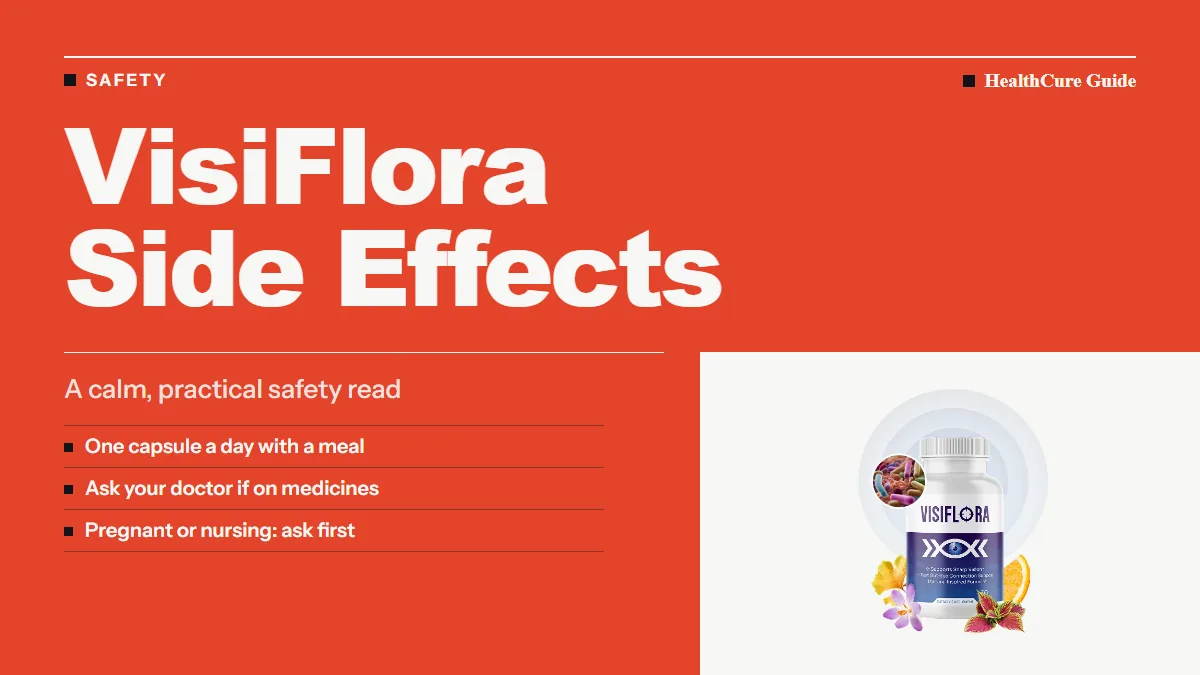
Anyone about to start a new supplement asks a quiet question: will it agree with me? It is a sensible thing to ask, and the best answer is a calm, practical one. This guide gathers what the label says, which of its ingredients deserve a conversation and what to do if something does not feel right.
We keep to facts from the label and general good sense. We are not doctors, and this page is not medical advice. For the product itself, see our VisiFlora overview.
VisiFlora side effects: what we know and what we do not
Let us start with honesty. The seller pages that we read do not publish reported side effects, and we have no testing data of our own. So we will not make up a list, and we will not claim that nobody ever has a problem. Supplements, like foods and medicines, suit different people differently.
What we can offer is what is printed on the bottle, plus a few widely shared precautions about the kinds of ingredients involved. That is a solid footing for a conversation with a doctor or pharmacist, which is the right next step for anyone with a particular concern.
Start with the label
The caution on the bottle is short, and in plain words it says four things.
- Do not go beyond the recommended dose, which is one capsule a day.
- The capsule is not made for anyone below 18.
- It is not made for women who are pregnant or nursing.
- If you are on a medication or have a medical condition, a physician should hear about it before you begin.
Storage is just as brief. Aim for a cool, dry spot with a ceiling of 30°C (86°F), keep the bottle away from small hands and leave it unopened if the safety seal arrives broken or absent.
The ingredients that merit a conversation
A few of the plant ingredients come up often when doctors review what a patient takes.
- Ginkgo (leaf): often mentioned in conversations about blood thinners and planned operations.
- Quercetin and grape seed extract: plant ingredients that belong in the same conversation.
- Coleus forskohlii (root): worth naming if you use blood-pressure or diabetes medicine.
None of this predicts a problem. It simply means that a doctor who knows your medicine list can answer in a minute what no website can.
The nutrients to add up
Four nutrients on the panel are worth tallying against your other products: zinc at 11 mg (100% of the daily value), copper at 0.9 mg (100%), selenium at 20 mcg (36%) and vitamin A at 450 mcg RAE (50%). If you already take a multivitamin or a separate supplement with any of these, the amounts add together.
A short way to check: write down the amount of each nutrient from every product you take, then add the columns. If a total looks high, or if you are unsure, a pharmacist can usually help in a few minutes. Our label tables give you every figure in one place.
Medicines and plans to mention
Put these on your list if they apply to you.
| If this is part of your life | What to say to your doctor |
|---|---|
| A blood thinner | The blend has ginkgo, quercetin and grape seed extract |
| Blood-pressure medicine | The blend holds several plant extracts |
| Diabetes medicine | Coleus forskohlii and quercetin are in the mix |
| An operation on the calendar | Supplements are usually reviewed beforehand |
| Other supplements | Vitamin A, zinc, copper and selenium may overlap |
Keep taking everything you were prescribed. A supplement is an addition to your routine and never a replacement for medicine.
Who should skip it
Three groups are told by the label to sit this one out: people under 18, pregnant women and nursing mothers. If that describes you or someone in your household, simply do not start.
A sensible first few weeks
If your doctor is happy and you decide to go ahead, a gentle start helps you notice how you feel.
- Take one capsule at a meal, with water, as the seller suggests.
- Do not double up after a missed day, because the label asks you to stay within the recommended dose.
- Jot down the date you begin, and a line a week about how you feel.
- Allow a few weeks, the timescale the seller itself mentions, before drawing conclusions.
If something feels off
Stop taking the capsule and speak to a health professional. If you are worried, contact your doctor or pharmacist without delay. For anything urgent, seek care in the usual way.
Should you decide the capsule is not for you, the seller’s guarantee gives you 60 days counted from delivery. You email [email protected], mail the entire order to the Aurora, Colorado returns address and cover the postage. The seller refunds what you paid minus shipping fees. Our guarantee guide lists every step.
Reading your own signals
Over the first weeks, the most helpful thing you can do is pay quiet attention. Notice whether you take the capsule more comfortably with breakfast or with dinner, and keep it with a regular meal so the habit sticks. Notice whether anything about your day changes in a way you did not expect. A short note on your phone is plenty.
If you ever wonder whether a change is linked to the capsule, a simple pause and a call to your doctor or pharmacist will settle the question faster than guessing. That pause costs you nothing, and it keeps the decision in the hands of someone who knows your history.
Where the guarantee fits
A money-back guarantee is not a safety measure, and nobody should use a refund window as a substitute for medical advice. What it does is take away the financial pressure of a decision. You can take your time with your doctor, begin when you are ready and send the order back if it is not right for you.
What a good conversation with your doctor looks like
Appointments are short, so a little preparation helps. Bring the bottle, or a photo of the supplement facts panel, and a list of everything you take. Say plainly what the capsule is for: the seller designed VisiFlora to support everyday eye comfort, particularly through screen time and reading. Then ask your questions.
- Does anything in this label clash with my medicines?
- Should I stop taking it before a planned procedure, and when?
- Is the vitamin A, zinc, copper and selenium here too much on top of what I already take?
- How would I know if it were not agreeing with me?
Pharmacists are another good source, and many are glad to look over a label in a few minutes. Our safety page lists similar questions in a handy form.
A word for people who prefer to wait
Some readers like to see how a routine feels before adding anything new, and that is a perfectly good instinct. If you are mid-way through a course of medicine, recovering from something or simply nervous, there is no deadline on starting. The seller’s 60 days begin only when your order is delivered, so you can order at a calm moment and begin once your doctor has given a view.
Our view
For most people who check the label first, VisiFlora looks like an easy, modest addition to a routine. For anyone on medicine, with a medical condition, under 18 or expecting, the answer starts with a physician. Our ingredient tour gives you more of the background to bring along.
Good to know:
- This page is general information, not medical advice.
- Supplements affect people differently.
- Show your doctor the label if you take regular medicine.
Common questions
Are VisiFlora side effects published anywhere?
The seller pages that we read carry no list of reported side effects. We have no data of our own either, so we will not invent a list or promise that none occur.
Who is told to stay away from VisiFlora?
Anyone under 18, and pregnant or nursing mothers. The label also advises a physician's input first for anyone taking medication or living with a medical condition.
Why do blood thinners come up?
The blend includes ginkgo, quercetin and grape seed extract, plant ingredients that doctors like to hear about when you use a blood thinner or have surgery planned.
Can I take it alongside a multivitamin?
Check first. The label shows vitamin A, zinc, copper and selenium, and a multivitamin may carry the same ones, so add the amounts together or ask a pharmacist.
What if I feel unwell after starting?
Stop taking it and speak to a health professional. If you decide to return the order, the seller's 60-day guarantee counts from delivery.
Is it meant for long-term use?
The seller says it is designed for daily nutritional support and advises checking with your physician. That check is the sensible answer for your own situation.