TedsWoodworking · Safety
TedsWoodworking Safety: Building Rules and Tool Basics
Building rules, tool safety, file formats and the honest limits of any plan library, in one plain guide you can read before you cut the first board.
- $67, one payment
- 60-day refund
- DIY & Home Projects
At a glance
- Refund window
- 60 days
- contact its support page with your order details
- Price
- $67
- one payment at checkout
- Written by
- HealthCure Guide Editorial Team
- Published
- Reading time
- 9 min read
A plan library is exciting, and it is easy to start cutting the moment a drawing looks right. Before you do, it helps to slow down for a few minutes. Building rules, tool safety and the limits of any plan are the parts that protect you and the people who will use what you make. This page sets them out plainly, so you can read them before you order, and again before the first cut.
The Building Rules Come First
The most important point is this: the plans are not made to meet any building code. The seller says so in its support pages, and it says the builder is responsible for local safety codes. For a bookshelf or a small planter, that check is usually simple. For a shed, a deck, a bunk bed or any other structure, it matters a great deal.
Before you start a structure, do three things:
- Ask your local building department whether a permit is needed, and what size, height and placement rules apply to your property.
- Compare the plan’s dimensions and fixings with those rules, and adjust the design where needed.
- Keep a record of the rules you checked, so you can answer questions later.
Rules differ by area, and they change over time. Treat this list as a starting point, and confirm each point with the people who enforce the rules where you live.
Power Tool Safety
Most plans, the seller says, need a table saw, a drill, clamps and a sander. Each of these tools has a manual, and the manual sets out the safe way to use it. Read it before the first use, and follow it every time, including the guards, the push sticks and the stance you take at the saw.
Wear eye protection whenever you cut, sand or drill, and wear hearing protection around loud tools such as saws and sanders. Dust matters too: sanding and cutting produce fine particles, so work in a ventilated space and use a dust mask where the tool or the material calls for one.
A beginner label is not a safety guarantee. A plan that the seller marks as beginner-level still asks you to handle sharp blades, heavy boards and clamps. Take each step slowly, and stop if a cut feels wrong.
Check the Tool List Before You Buy
Every plan has a materials list and a tool list. Read the tool list before you buy any lumber. If you do not own a tool the plan needs, you can often change the method, but a change to the method may change the safety notes too. Ask a more experienced woodworker, or a local workshop, before you change a joint or a fixing.
Files, Printing and Software
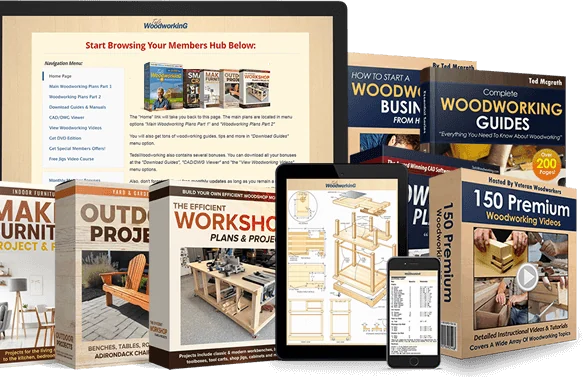
Plans come as PDF and DWG files. PDF files need a free PDF reader, and they are easy to print at home. Check the print scale on the page before you cut anything, because a plan printed at the wrong size gives the wrong measurements. DWG files need the DWG/CAD Plan Viewer that the seller lists as a bonus with the order.
Use only the files you receive through your own order. Downloads from file-sharing sites are not the same library, and they come with no seller support and no guarantee.
The Honest Limits
Every plan library has limits, and this one is no different. The seller’s plan count and category numbers are the seller’s own figures. The library is digital, so you need a printer, a device and the tools and lumber for each project. A plan is also a set of instructions, not a finished piece or a substitute for your own care at the bench.
The seller’s guarantee is a 60-day money-back guarantee, contact through its support page. It covers your order. It does not replace the building rules or the tool manuals that apply to your project.
A Simple Pre-Build Checklist
Use this list before each project. It takes a few minutes and saves a great deal of trouble later.
- The local building rules for this structure are checked, and any permit is in hand.
- The plan’s dimensions and fixings match those rules, or the design has been changed to fit.
- You have read each tool’s manual and know its guards and controls.
- Eye and hearing protection are on hand, and your workspace is clear and ventilated.
- The printed plan is at the correct scale, and the cut list matches the materials list.
- Children and pets are kept away from the cutting area.
Who Should Take Extra Care
Some readers should slow down further. If you are new to power tools, read the manuals and practise on scrap wood first. If you are working with children, keep them out of the workshop while the tools are running. If you have a health condition that affects your balance, grip or hearing, talk to your doctor before you lift heavy boards or use loud tools.
Build Safely, and Enjoy the Work
Woodworking is rewarding when it is done with care. The plan library gives you choice and clear lists. The safety habits on this page make sure the work stays enjoyable from the first cut to the finish.
For the full order details, see the price page. For the contents of the library, see the what’s included page. The FAQ answers common questions about the plans and the guarantee.
TedsWoodworking Official Pricing
As listed on the official order page. One payment at checkout, with nothing mailed. Checkout may show your local currency plus tax.
Plan library
$67
one payment, per plan library
- Digital plan library, PDF and DWG files, per the seller
- Cut lists and materials lists with each plan, per the seller
- Three bonuses listed by the seller
- New plans added monthly, per the seller
- 60-day money-back guarantee from the seller
Common questions
Do the plans meet building codes?
No. The seller says the plans are not made to meet any building code. Check with your local building department before you start a shed, deck, bunk bed or other structure.
Who is responsible for local safety rules?
The builder. The seller's support pages say the builder is responsible for local safety codes, so the check belongs to you before the first cut.
What protection should I wear?
Follow each tool's manual, and wear eye and hearing protection. A beginner label on a plan is the seller's label, and it is not a safety guarantee.
Do I need a permit for a shed?
That depends on where you live. Ask your local building department, and check the rules for size, height and placement before you buy materials.
Other products in DIY & Home Projects
-
 Energy Revolution System
 is a PDF download that the seller presents as a guide to a small home power device. $39 once, with a 60-day money-back guarantee from the seller.
-
 My Shed Plans
: a digital library of shed plans with materials lists, cutting lists and step-by-step instructions, per the seller. $37 one payment and a 60-day money-back guarantee.
-
 Smart Water Box
: a DIY water-from-air guide that the seller says shows how to build a small box for gathering water from humid air. Step-by-step, three bonuses mentioned, refund by email.
-
 Water Freedom System
A digital guide in PDF and video files that the seller says shows how to build a small home device for collecting water from humid air. $39.69 in one payment.