Neuro-Balance Therapy Side Effects: A Calm Safety Guide
A home balance routine has no formula to worry about, but it still deserves a sensible start. Here is how to practice calmly, who should ask a doctor first and what to do if something feels off.
- Written by
- HealthCure Guide Editorial Team
- Reviewed by
- HealthCure Guide Editorial Team
- Updated
- Reading time
- 7 min read
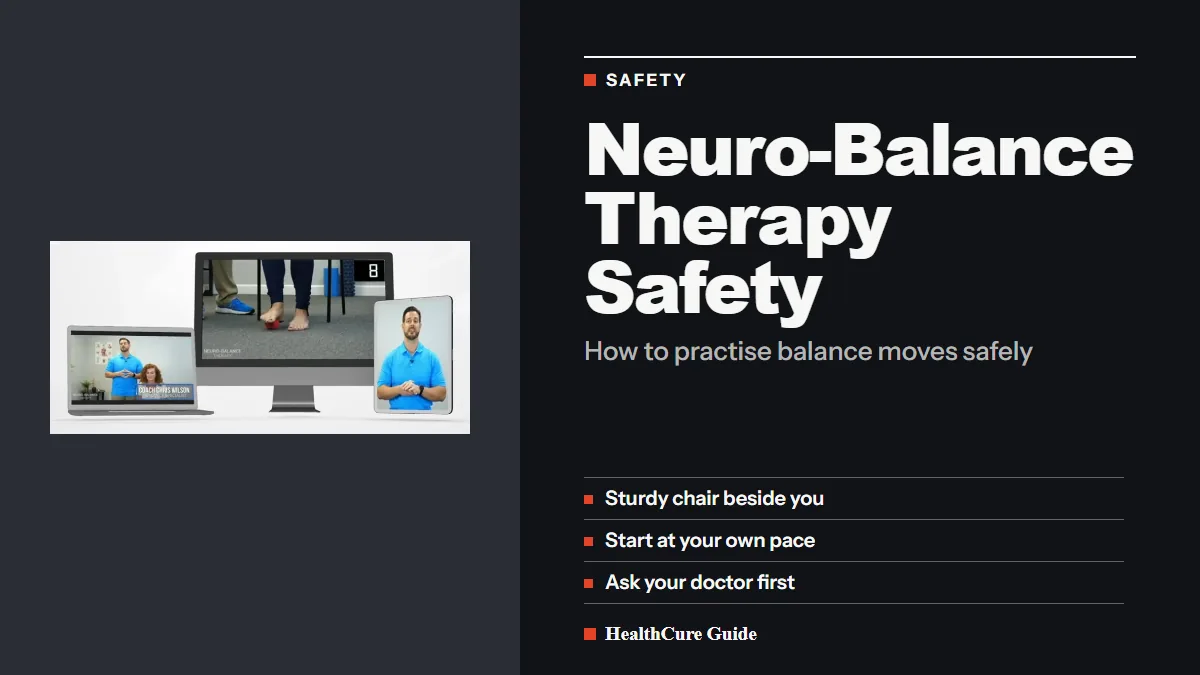
Wanting to feel steady on your feet is a good reason to start a routine, and wanting to start it sensibly is even better. If you are searching for Neuro-Balance Therapy side effects, the calming news is that this is a video-led exercise program, nothing you swallow, so there is no formula to study and no tablets to keep track of.
What it does ask for is a sensible setup. This guide is our own general advice for practicing at home, kept calm and practical, and it sits beside the seller’s own terms. The full program overview gives the complete picture.
What kind of program is this?
The program is built from short follow-along sessions for the feet and legs, arranged at Beginner, Intermediate and Advanced levels. According to the seller, balance specialist Chris Wilson created it to support surer footing, stronger legs and more confidence, and some sequences are done seated. It also includes a digital manual of exercise pictures.
Since it is exercise and not a product you consume, the usual questions about side effects become questions about technique: how fast to go, how to arrange the room and when to stop. The program makes no claim of helping with any medical condition, and Chris Wilson says in his own words that he is no doctor.
Why the format helps you stay in control
A video-led program has a few built-in comforts. You choose the room, so you can pick a quiet one with a firm floor. You choose the time, so you can practice when you are rested. You choose the level, so Beginner can be your home for a long while. And you can pause, rewind or stop at any moment. The program’s main page shows how the levels are organized, and the same control carries over to the DVD edition if you prefer a disc.
None of this removes the need for care. It simply puts the pace in your hands, which is exactly where a cautious routine should sit.
The seller’s own disclaimer
According to the seller’s terms, the program cannot replace medical advice, and readers are urged to talk with a health care professional before acting on it. We agree, and we put it in our own words below because it is the most important step of all.
Ask your doctor first
Our advice is to talk to your doctor before starting any balance or exercise routine. It matters most if any of these apply to you:
- you have taken a tumble, or you worry about one
- you have had recent surgery
- you have dizziness or lightheadedness
- you have neuropathy or numbness in your feet
- you have a joint replacement
- you have osteoporosis
- you live with another health condition, or take medicines that touch on balance or blood pressure
A short chat takes minutes, and your doctor can point out which moves deserve extra care. It also leaves you free to enjoy the program without second thoughts.
Set up a steady space
A good setup does most of the work.
- Practice next to a solid counter or heavy chair. Keep a hand near it at all times, especially in the early sessions.
- Take floor-level moves from a supportive seat. A firm chair is steadier than a sofa.
- Clear the floor. Move loose rugs and cords out of the way, and wear comfortable footwear or go barefoot if your doctor agrees.
- Have good light. You should see the screen and the floor clearly.
- Keep water and your phone close. A quick sip or a call for help is easier from within reach.
The bonus Top 20 Tips checklist can help you look over the rest of your home in the same spirit.
Keep the pace gentle
The three levels exist so that you can start gently. Begin at Beginner level, whatever your confidence. Finish each session feeling fine, not worn out, and let a level feel comfortable before you try the next. If something feels like too much, pause the video. Because the program is on a screen, you can stop, rest and come back without losing your place.
Questions worth taking to your doctor
Showing up with a few questions makes the visit more useful. Bring the program’s name, and consider asking:
- Is a gentle home balance routine suitable for me at the moment?
- Are there moves I should skip, or positions I should avoid?
- Is it fine to involve a spiky massage ball under my feet?
- Could any of my medicines affect my balance or cause dizziness?
- How soon should I tell you if I feel unsteady or fall?
Your doctor knows your history, so their answers outrank any general guide, ours included. A green light before pressing play is reassuring.
A cautious first two weeks
If you like a plan, here is a gentle one of our own. It is a suggestion, and your doctor’s advice comes first.
- Week one: stay at the Beginner level and practice a few times, each session short and relaxed, beside your chair or counter.
- Week two: repeat what felt comfortable, look through the manual and note any move you would like to approach more slowly.
- After that: move up a level only when the current one feels easy, and drop back to Beginner on any tired day.
Nothing here is a race. Slow and steady is easier to maintain, and maintaining it counts for more than any single session.
When to stop
Pause the session if you notice:
- pain, especially sharp or lasting pain
- dizziness or lightheadedness
- unusual shortness of breath
- any sense of feeling unwell
Rest, and tell your doctor if it happens again. A tumble or fresh wobbliness is worth a doctor’s visit too: medication, blood pressure, vision or the inner ear may be behind it, and a clinician can look into each.
A calm routine is also a repeatable one. Because the sessions are short and the levels are gentle, you can fit them into a morning or a quiet afternoon without turning your day upside down. Pausing for a drink of water, checking how you feel and carrying on only when you are ready are all part of practicing sensibly, and none of it needs special equipment beyond the chair or counter beside you.
A word on the spike ball
Many of the exercises call for a spiky massage ball under the foot. Only the DVD edition ships with one, so download buyers supply their own. Tender skin can bruise under it, so keep the pressure comfortable and avoid broken skin or numb feet unless your doctor agrees. Numbness is the reason for the second rule: a bruise could form unnoticed.
Where the guarantee fits in
A calm approach is easier when you know you can change your mind. Two sources agree here: the sales page offers a full refund if you are unhappy, and ClickBank allows a return or replacement within 60 days of buying.
- The download: open clkbank.com and look up the order and send a Refund Request through Get Support.
- The DVD edition: the discs go back by post within the 60 days, at your expense, and the refund is the order price less the shipping and handling charge.
The refund walkthrough lists every step.
Who this routine suits
The program is aimed at adults over 50 who want a simple routine at home, led on screen. It suits people who like a gentle start, who are happy to keep a chair nearby and who value the chance to repeat a session whenever they wish. With any medical condition, the right first step is a word with your doctor, and our contents list shows exactly what would arrive.
Good to know: Results differ between individuals. The program is a home exercise routine, not a medical treatment, and it does not replace advice from your doctor. More is on the catalog safety page.
Common questions
Does Neuro-Balance Therapy have side effects?
It is a video-led exercise routine, so nothing is swallowed. As with any exercise, pushing too hard can leave you tired, sore or wobbly, which is why a gentle pace and an early stop at any warning sign are our advice.
Who should ask a doctor first?
Anyone about to begin a balance routine, above all people recovering from a tumble or an operation, or living with vertigo, nerve damage in the feet, an artificial joint or thin bones.
Can I do the moves without holding on to anything?
We suggest working beside a firm chair or kitchen counter so a hand can always find support, and taking low moves from a steady seat.
Is the spike ball safe to use?
Tender skin can bruise under it, so keep the pressure comfortable and leave it out where skin is broken or feeling is dulled, unless your doctor says it is fine.
What if I feel dizzy or sore?
Stop and sit down. Pain, a spinning head or a general sense of being off are reasons to pause, and a tumble or fresh wobbliness is worth a doctor's visit.
What if the routine is not right for me?
Sixty days from the purchase date remain for a refund request: through ClickBank for the download, or by posting the discs back for the DVD edition.